Creative Dynamics in Photography
with Photographer Kate Causbie
This course explores the creative evolution of photography from a scientific invention based on understanding the physical behaviors of light, into acceptance by the fine art world. We will be guided by a few major phases of photography's history, focusing on distinct waves of photographic thinking and how they allow us to consider our own perceptions, distortions, and framings of the visual world around us.
$110 + tax

Kate Causbie
About your 2 Part Photography Class
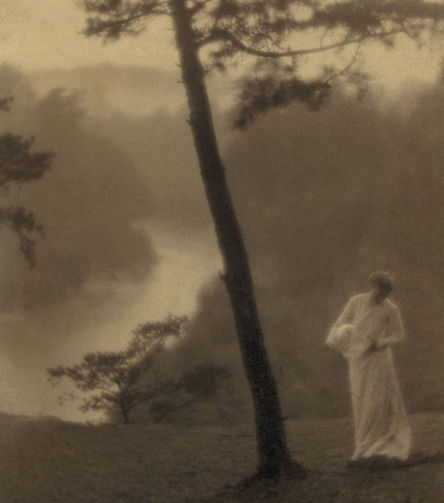
The first lesson will be an introduction to specific ideas in creative photography. We'll explore early inventors and innovators (Louis Daguerre, William Talbot, John Herschel, Anna Atkins), the first fine art movements (Pictorialism, Straight Photography), and key early philosophical shifts (Dorothea Lange's documentary photography, Henri Cartier-Bersson's surrealism and decisive moment, William Eggleston's assertion of the power of color).
During the two weeks in between meetings, students will be given prompts to explore the specific ideas and movements from the lesson.
The second lesson will be a guided critique, allowing each student to share their work and discuss each other's photographs using the terms, concepts, and ways of seeing developed since the first lesson.
Materials:
-
A camera of any type (camera phone is ok) and the needed accessories (memory card, battery charger, etc.)
-
The means to upload the photos to a computer or tablet (ex. memory card reader), to submit them online

Paul Strand. Untitled (Twin Lakes, Connecticut). 1916

Imogen Cunningham. Hands and Aloe Plicatilis. 1967.
Clarence H White. Morning. 1908.

Wiliam Eggleston. Untitled (St. Simons Island, Georgia). 1978.

Henri Cartier-Bresson. Scanno, Italy. 1953.

Kate studied photography at Wittenberg University, and has taught middle and highschool photography for 8 years. She splits her time between Washington state and Puglia, southern Italy, studying community music and dance traditions.
Her teaching style is very process-oriented and focus on building the visual awareness, confidence, curiosity, and perspective that allows students to experiment, tell stories, and communicate their ideas through their photographs.
Classes aren't about quick tips to get "better" shots -- instead they aim to foster learners' independent and unique creativity. By building awareness of the camera and the visual world around them, learners are empowered to communicate their experiences and ideas through their photography.